
Tuntun Children's Hospital is here for every step of your baby's growth journey.

At Tuntun Children's Hospital, we never base treatment decisions on bilirubin levels alone.
your baby’s age, the rate at which the jaundice is progressing, underlying causes, and their overall clinical condition.
We perform a comprehensive evaluation that takes into account
meaning they are prone to temporary increases in bilirubin levels
shortly after birth.
However, in some cases, other underlying factors may be involved.
Therefore, it is crucial to distinguish between simple, harmless jaundice and jaundice that requires medical intervention.

your baby may have more than just simple physiologic jaundice,
and a thorough medical evaluation is recommended.
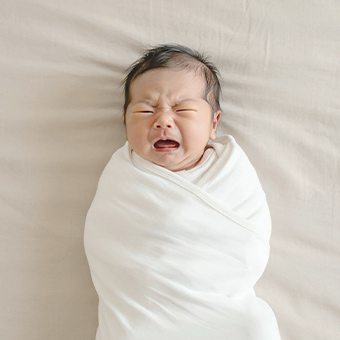
In these situations, actively investigating the cause is essential, rather than simply "waiting and seeing."
Here is how we evaluate your baby's condition:
We evaluate your baby's overall well-being alongside their jaundice levels.
We look at the big picture to determine
if active treatment is necessary:
→ We will monitor their progress.
→ Further evaluation and potential treatment
If necessary, we perform tests to uncover the root cause of the jaundice.
Test results help us differentiate between simple jaundice
and conditions requiring intervention:
If jaundice is prolonged or
presents with atypical symptoms,
we may perform ultrasound imaging to check for
structural abnormalities in the liver and bile ducts.
Performed only when medically indicated
based on your baby's specific condition:
goes far beyond
simply deciding if a number is "high" or "low."
The necessity of treatment is determined by comprehensively considering the following factors.
Neonatal jaundice treatment is not solely aimed at lowering bilirubin levels, but also,
it's safely managing the condition while preventing complications.
Hours/days since birth
Bilirubin level and the rate of increase
The baby’s overall physical condition
Diagnostic test results
Presence of specific risk factors
It uses special lights to safely help your baby's body break down and eliminate bilirubin.
Phototherapy is the most standard and fundamental treatment for neonatal jaundice.
Non-invasive and relatively safe treatment
May require inpatient treatment depending on the baby's condition
Continuously monitor jaundice levels and general condition during treatment
Tuntun Children's Hospital is fully equipped with dedicated pediatric inpatient facilities,
allowing us to safely administer neonatal jaundice treatments, including medical phototherapy.

Step-by-step treatment customized to the baby's bilirubin levels
Continuous health and vital monitoring throughout treatment
Dynamic adjustment of treatment plans based on the baby's response
We carefully distinguish between cases that can be safely managed via outpatient observation
and those requiring inpatient care.
If specialized intervention is needed, we seamlessly coordinate further testing or referrals
to ensure your baby receives the optimal level of care.
If an underlying cause is identified, we treat the root issue alongside the jaundice.
→ Intensive monitoring and targeted treatment
→ Appropriate infection treatment (e.g., antibiotics)
→ Specialized evaluation and medical management
Proper feeding is one of the most critical aspects of managing jaundice.
 To Parents/Guardians